 UG25 Mapping Data Budget: Size the Cards, Copies, and Field Review
A corridor survey can finish its capture plan and still miss its delivery window. The first card arrives while the second crew is preparing another segment. The reader works, but copying the raw files takes longer than expected. A second drive has room for the images and nowhere to put the accompanying log. By the time someone opens a sample, the vehicle is packed and the crew has lost the chance to investigate a missing section. Buyers evaluating the UG25 for mapping can price this part of the job before they commit to a camera or a handover deadline.
UNITED UAV lists the UG25 as a complete fixed-wing VTOL aircraft for applications including wide-area mapping and inspection. Its published box list includes the aircraft, four Tattu 6S 25,000 mAh batteries, a T12 controller, a PC1080 charger and an Airbox. The same page identifies a mapping camera as a possible mission payload. The box list contains no named mapping camera. Specify the camera, recording media, reader and transfer procedure as separate lines in the quotation. The camera and ground workflow determine the data quantities in this guide. The worked figures are planning examples for a hypothetical imaging system.
1. Start with the files the processing team needsName the first deliverable, who checks it and what must exist before the crew can leave the site. A corridor orthomosaic may require original images, their positions, a record of gaps and a description of the planned footprint. A different contract may require individual photographs linked to asset identifiers. A thumbnail gallery can help someone spot an obvious problem in either job. The processing team still needs to specify the original files and any sidecar data it expects to receive.
Ask for a sample folder from the exact proposed camera and recording mode. Open it with the software the processor will actually use. One shutter event might create a raw file and a JPEG, while a separate file holds position data for the entire segment. Video clips, diagnostic logs and previews may go to different storage locations. Identify how each file class is produced, how it is exported and who needs it. If the camera only exposes files through a powered connection, include the cable, host software and power source in the ground kit. An unexplained folder on the first job is a procurement gap.
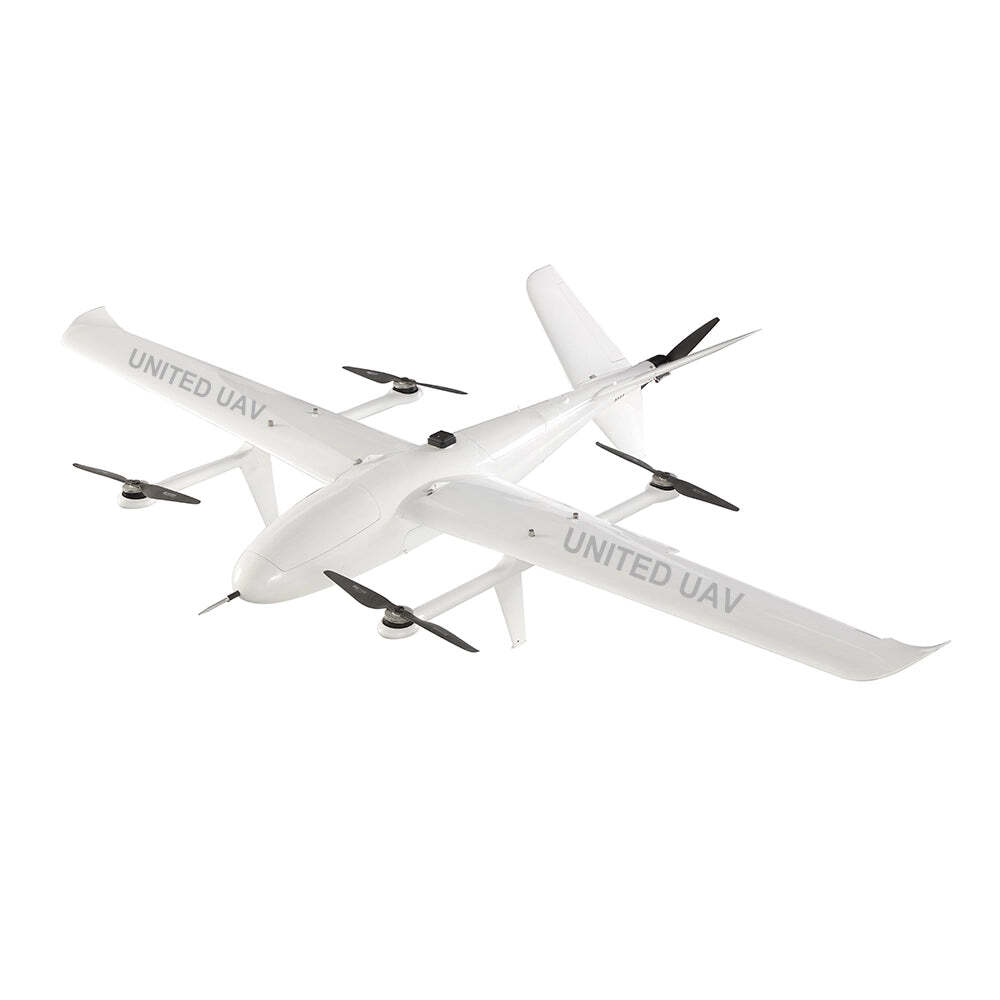
 The airframe view used in the seller's UG25 box list. Specify the survey camera and its recording media separately in the quotation.2. Count recording events, then convert them to bytes
Use a segment as the planning unit. It should have an identifier and a set of expected capture events that the crew can recognize in the field. Start with the event count from the approved capture plan and add a separately documented allowance for repeats, test frames and accepted changes. Count events first because a camera can write more than one file for each event. If the proposed capture system uses bursts or multiple sensors, specify how many files each accepted event is expected to produce in each channel. The definition should survive a change in camera model or software.
Suppose a segment calls for 600 events, with a 15 percent planning allowance bringing the budget to 690. The hypothetical camera stores a 32 MB raw file and an 8 MB JPEG per event. At the nominal event count that is 24 GB, plus 0.4 GB reserved for logs and sidecars. A stress case uses the full 690 events and larger files of 42 MB raw and 11 MB JPEG. It totals 36.57 GB of images plus 0.4 GB of supporting files, or 36.97 GB. These calculations use decimal units. Three such segments would produce 110.91 GB before any separately budgeted video, previews or processing output.
Measure file sizes from representative scenes and the actual profile before using the worksheet in a bid. A small sample of easy scenes can underestimate compressed output. Include detailed textures and difficult exposures if they are part of the expected work. Record a typical size, an observed upper range and the conditions of the sample. Where a contractor has a firm record of the maximum per event, use that limit for the storage check. Where the upper end is uncertain, carry an explicit allowance and make the uncertainty visible to the person signing the estimate.
3. Give the media a cutoff and an identityMeasure free writable capacity on a card prepared in the selected camera. Set the usable budget after any workspace reserve and allow for data already on that card. If the example card offers 53 GB after that reserve, the 36.97 GB stress case fits with 16.03 GB of headroom. Two such segments would need 73.94 GB, so that card cannot carry both under the example assumptions. A spare card held at the field station and labeled for the next segment is more useful than a second card someone expects to find in an equipment case.
Capacity and sustained recording are separate checks. If the sample camera produces one event every 1.5 seconds, its illustrative 40 MB event averages about 26.7 MB/s and the 53 MB stress event averages about 35.3 MB/s. Average throughput can conceal short bursts and time spent draining the camera buffer. Run a sustained test with the proposed camera, card model, firmware and file profile. Check that the expected files remain readable and that a backlog of writes has finished before the media is handed off. Include a controlled full-card case in the bench test so the crew can recognize the actual failure indication.
Assign each medium a visible identifier and associate it with the project, segment and capture attempt. The camera may reset filenames when a card changes or the counter wraps. Use those names inside a preserved source tree, paired with the segment and medium identifiers, so two files called the same thing remain distinct. Repeated coverage should have its own attempt record. That keeps the processor free to decide which captures to use while preserving what the field crew actually collected.
Size the card pool from the maximum number of media still out of circulation. Track a card through the camera, the ingest station, a hold state and release back to the crew. At minute forty-four in the slower example below, the third card has just arrived, the second is still at the workstation and the first has cleared the station. If the source must remain untouched until an office check, even the first card is still on hold. Starting another segment would then require a fourth prepared card. A shared bin for both released and held media makes the inventory count look better while hiding the actual shortage.
4. Time the ingest station as a queueA reader's advertised speed describes a component of the path. Time the complete path with actual payload media, readers, cables, drives, directory size and verification steps. For one 36.97 GB batch, a measured effective transfer rate of 80 MB/s would put the copy alone at roughly seven minutes and forty-two seconds. At 35 MB/s it would take about seventeen minutes and thirty-six seconds. Allow separately for a second copy, verification, previews and human review if those were outside the measurement. Run the timing again under the expected power and thermal conditions and with any other drives the workstation must handle.
Write down when media are expected to arrive and when a verifier can release each batch. Suppose cards arrive at minute zero, twenty-two and forty-four. In an example rehearsal, the single ingest station takes eighteen minutes per batch through both copies, verification and the initial review. It finishes at minutes eighteen, forty and sixty-two. If the end-to-end service time rises to thirty-one minutes, the completion times move to minutes thirty-one, sixty-two and ninety-three. The third card waits eighteen minutes and finishes forty-nine minutes after it arrives. A plan allowing twenty minutes from the final handoff to site departure would miss that constraint.
The response depends on which step occupies the station. An additional reader helps when independent paths can run concurrently and the host and destination drives can sustain both streams. It buys little if all work still passes through the same slow destination or awaits the same reviewer. Time each stage individually as well as the end-to-end run. A supplier can use those measurements to propose a second independent station, a larger card pool or a longer field window and explain which bottleneck the change actually removes.
5. Specify what makes a copy acceptableFor each card or export batch, make a manifest of relative paths, file sizes and hashes, such as SHA-256. Verify both destination copies against the same recorded set. Use distinct storage devices. Plan where they will travel and who will hold them when the crew leaves the site. A second folder on the first drive offers a convenient workspace and shares the same failure point. Keep the source media available until the required copies and field checks pass, with the release decision recorded by the named owner.
Reserve the full batch budget on each destination. In the example each destination needs room for at least 110.91 GB for the three stress-case segments, plus its own reserve and other planned files. Budget previews and processing scratch space explicitly, particularly if the preview application shares a drive with the originals. Any upload to an office or customer system is another timed stage. Specify what happens when the connection is unavailable and who confirms receipt later. A promised field release that depends on network access deserves a separate offline rehearsal.
Build interruption into the test. During a bench rehearsal, interrupt the first copy using a procedure appropriate to the test equipment and leave the source untouched. The destination should be recognizable as incomplete until verification succeeds. Restart or resume using the documented tool, compare the resulting manifest and record which path was used. Include a case with a missing sidecar or a deliberately excluded test file. An operator should be able to name the affected batch and explain whether another copy, another export or a further field review is needed.
Add an independent opening test on the receiving workstation. Select a raw image, its corresponding JPEG and a sidecar from each recording mode. Check that the workstation can identify the set without contacting the person who collected it. A hash match can coexist with an unsupported raw codec, a corrupt source image or a log that the receiving tool interprets with the wrong unit. Record the application and version that opened each file type. If a conversion is required, keep the originals and name the conversion as a separate deliverable with its own time and storage budget.
6. Make the review useful before the crew leavesByte agreement establishes that the destination reproduces the files supplied by the source. The field review asks whether that source holds the material the segment was meant to deliver. Compare the expected events or footprint with available positions, inspect whether the files open and check that required logs and sidecars belong to the same attempt. Decide in advance how the crew will record exclusions and repetitions. If the payload cannot provide a trustworthy event list, use another agreed record and document which gaps it can and cannot detect.
Inspect samples along the route, including the start, end and any planned handoff between adjacent blocks. Add targeted checks where the acquisition plan predicts difficulty, such as an abrupt change in surface texture. A regular sample reveals changes through the segment. The targeted checks help catch failures that an evenly spaced sample could miss. Record the checked file identifiers and the exception found. This lets the processor reopen the same files and judge the result without relying on a verbal summary.
Use separate decisions for copy verification, field release and final map acceptance. For example, both copies may pass while a missing series still requires investigation. The field team can flag that series and preserve the underlying data. The processing team then evaluates reconstruction, georeferencing and the customer’s actual acceptance criteria with the appropriate evidence. Agree who can authorize departure with an unresolved issue and how that person records the reason. This keeps a practical field check from turning into an unintended statement about the final map.
7. Put one rehearsal into the quotationRequest the exact camera and revision, recording format, permitted media, sample card tree and the way each expected sidecar is exported. Ask the bidder to run a representative segment on the proposed storage and reader hardware with the receiving team’s software. Record the number of events, produced bytes, available card space, time for each verified copy, time for the field review and any manual intervention. Include the pass condition for the interrupted-copy case and an example of the completed manifest. If a different camera profile or reader is proposed later, specify which parts of the rehearsal must be repeated.
A useful quotation separates the UG25 aircraft package from the proposed payload and ground data kit, then names the person responsible for each interface. It states who supplies the cards and readers, who verifies each copy and who signs off on the handover. It also spells out what a normal batch looks like and how the crew identifies a batch that needs attention. The acceptance record can fit on one page if it points to the right sample files and timed measurements.
When requesting a configuration review, include the required deliverable, a representative segment count, any mandatory file format, the time available for field release and the processing environment. The same information lets bidders show whether their proposed setup meets the workflow and where a buyer needs to supply equipment or staff. Start with the
UNITED UAV UG25 aircraft listing and box contents.
Commercial disclosure: Published by UNITED UAV Official. UNITED UAV sells the UG25. The aircraft and box references come from the seller’s listing. The file sizes, capture counts and queue timings are illustrative planning inputs.

 IRC Chat
 Like Us


